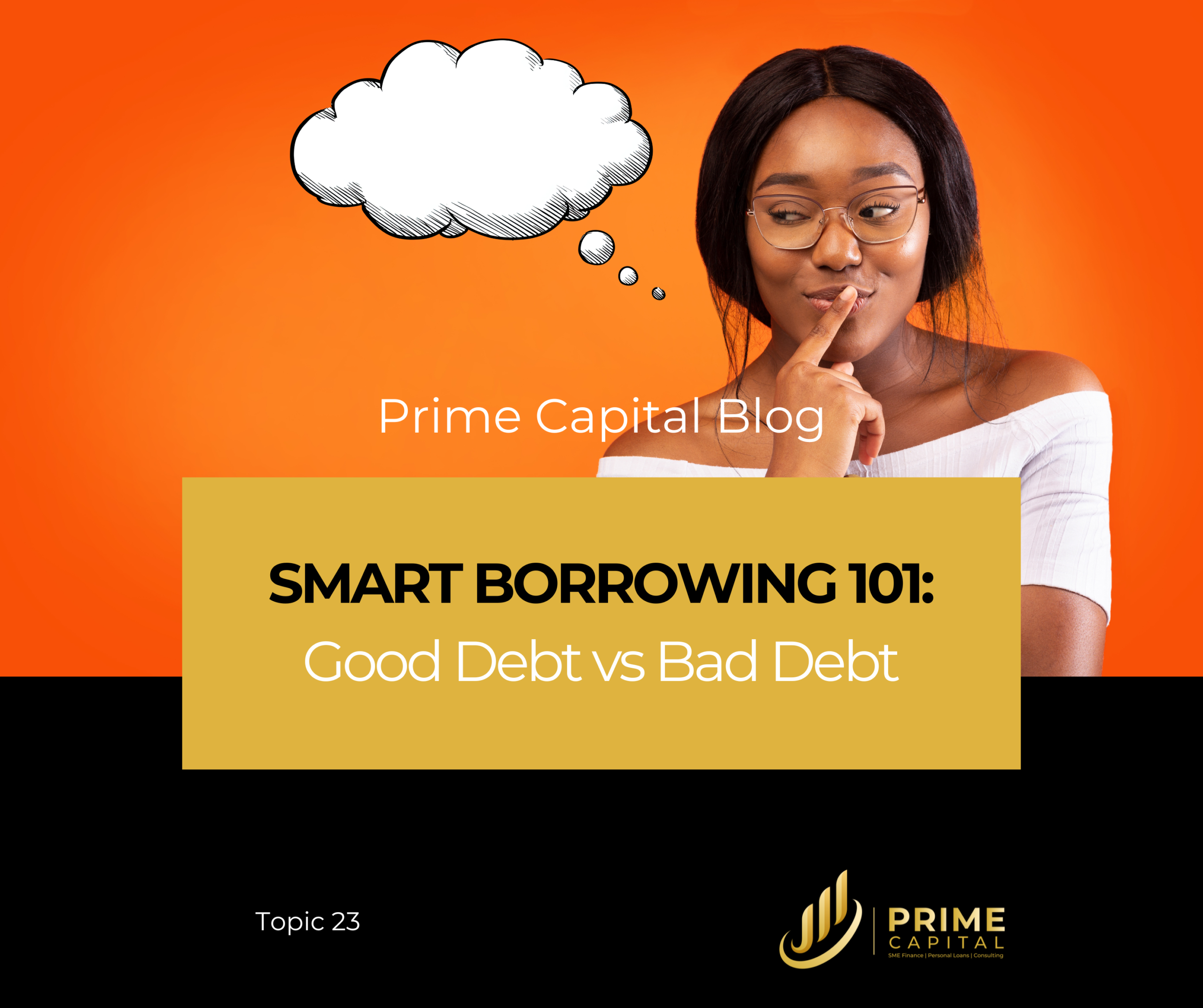
Smart Borrowing 101: Understanding Good Debt vs. Bad Debt
Making Borrowing Work for You, Not Against You
Borrowing money is often misunderstood. Many people see debt as something to avoid completely, while others rely on it without fully understanding the consequences. The truth lies somewhere in between. Debt can either support growth or create strain, depending on how it is used.
For individuals and SMEs in Lesotho, understanding the difference between good debt and bad debt is essential to building financial stability.
What Is Good Debt?
Good debt is borrowing that helps you grow, generate income, or strengthen your financial position.
SME Scenario: Borrowing to Increase Production
A small manufacturing business needs a machine that will double production capacity. The owner takes a loan to purchase the equipment, increases output, secures more clients, and uses the additional revenue to comfortably service the loan.
In this case, borrowing supports growth. The debt has a purpose, a return, and a clear repayment plan.
Good debt typically:
- Is tied to income generation.
- Has a clear business purpose.
- Is supported by realistic cash flow planning.

What Is Bad Debt?
Bad debt is borrowing that does not create long-term value and places pressure on finances.
SME Scenario: Borrowing Without a Plan
A small business owner takes a loan to cover ongoing expenses without addressing declining sales or poor cost control. The loan temporarily relieves pressure but does not improve income. Repayments become difficult, leading to missed payments and further borrowing.
In this situation, debt masks the problem instead of solving it.
Bad debt often:
- Is used for consumption rather than growth.
- Lacks a repayment strategy.
- Leads to repeated borrowing.
Questions Every SME Should Ask Before Borrowing
Before taking on debt, business owners should ask:
- What specific problem will this loan solve?
- Will this borrowing increase revenue or efficiency?
- Can the business service the loan even during slow months?
- Do I fully understand the interest rate, fees, and repayment schedule?
Responsible lenders also ask these questions, because sustainable borrowing benefits both the borrower and the lender.

Borrowing for Business Growth
For many SMEs in Lesotho, access to finance is critical. When used responsibly, borrowing can support:
- Equipment purchases
- Stock financing
- Working capital during growth periods
- Business formalisation and compliance
At Prime Capital, lending is guided by affordability, purpose, and long-term sustainability. Loans are structured to support business growth, not to create financial distress.
The Role of Financial Literacy in Borrowing
Understanding cash flow, interest rates, and repayment obligations helps business owners use debt wisely. Financial literacy allows borrowers to assess whether a loan makes sense before committing.
Borrowing works best when it is paired with planning, record-keeping, and discipline.
Final Thoughts
Debt is not inherently good or bad. Its impact depends on how it is used.
When borrowing is intentional, planned, and aligned with income generation, it becomes a tool for growth. When it is unplanned, it can quickly become a burden.
The goal is not to avoid borrowing, but to borrow wisely and responsibly.
At Prime Capital, we believe responsible lending creates strong businesses. That is why we partner with SMEs to assess needs, structure suitable financing, and support sustainable growth.
If you are considering borrowing to grow your business, take time to understand your options and responsibilities. Follow Prime Capital for practical financial insights and guidance that help you make informed borrowing decisions with confidence.
Building a business starts with smart financial choices.